When you think of Dubai, you probably picture the Burj Khalifa, the Palm Jumeirah, or maybe the glittering shopping malls. But there’s one structure that doesn’t scream for attention-yet changes how you see the whole city. The Dubai Frame isn’t just another tourist spot. It’s a bridge between old and new Dubai, and if you’re visiting, skipping it means missing a perspective you won’t find anywhere else.
What Exactly Is the Dubai Frame?
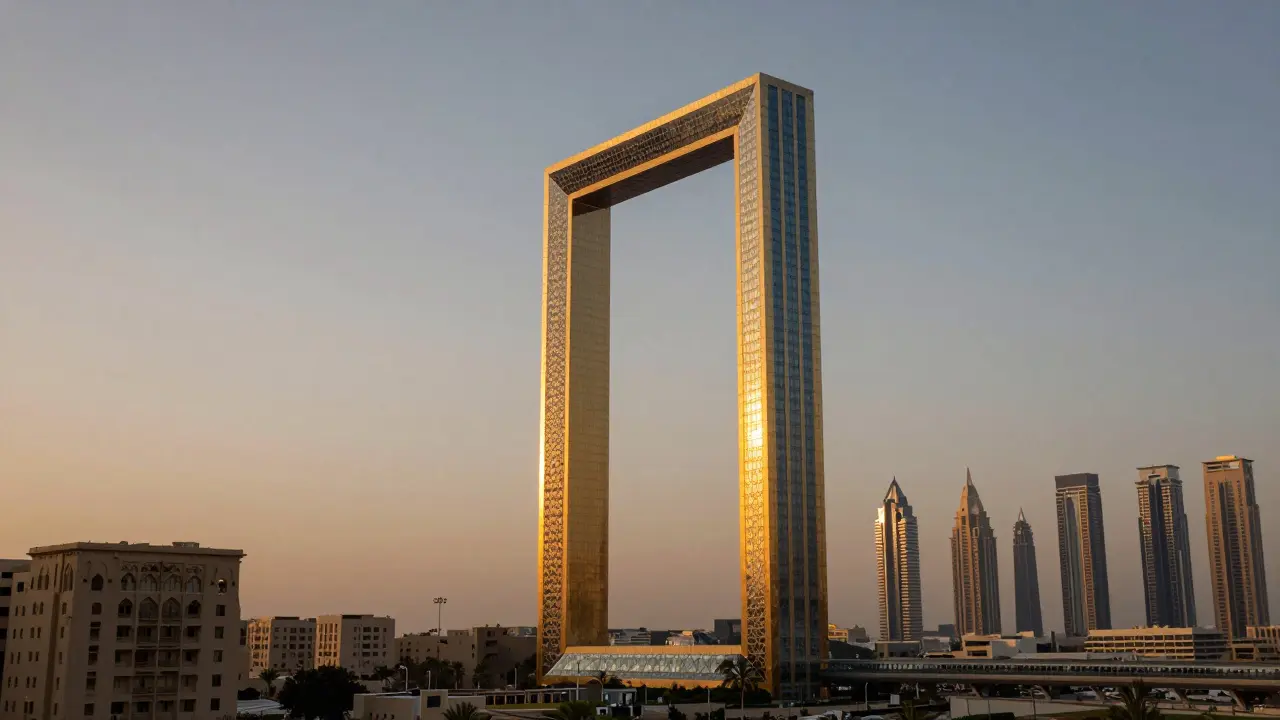
The Dubai Frame is a giant, 150-meter-tall picture frame made of steel and glass. It sits in Zabeel Park, connecting the historic side of Dubai-think narrow alleyways, traditional markets, and desert landscapes-to the futuristic skyline of Downtown and Business Bay. Built in 2018, it’s not just a monument. It’s a museum, an observation deck, and an experience all rolled into one.
The frame’s design is simple but brilliant. At 93 meters wide and 2.5 meters thick, its vertical structure looks like a giant photo frame standing on the ground. Walk across the sky bridge at the top, and you’re literally framed by the city-past on one side, future on the other. No filters. No editing. Just raw, uncut views.
The View from the Top
Most people think the Burj Khalifa has the best views in Dubai. And sure, it’s tall. But the Dubai Frame gives you something the Burj doesn’t: context.
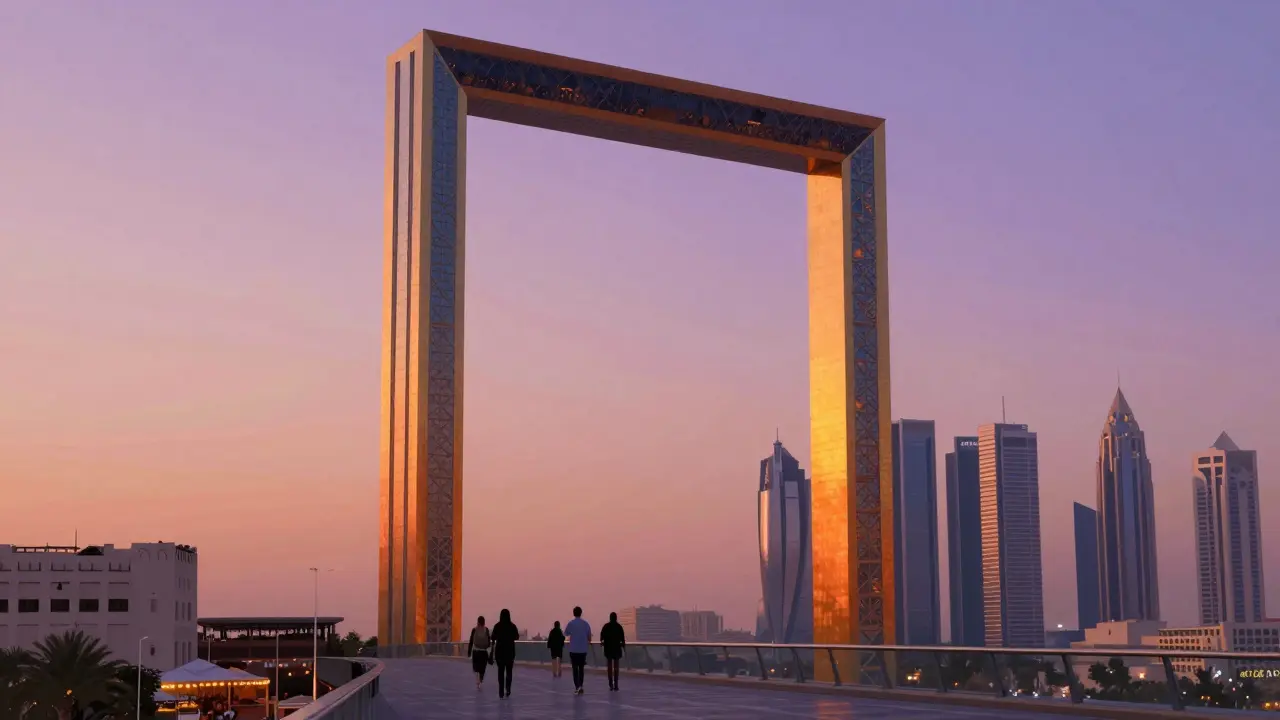
From the sky bridge, you can see the old neighborhoods of Al Garhoud and Deira to the east-where fishermen still unload their catch and gold souks hum with haggling. To the west, the skyline explodes with glass towers, the Dubai Mall, and the Dubai Fountain. You don’t just see the city-you see how it grew.
At night, the frame lights up in shifting colors, turning into a glowing landmark that can be seen from miles away. But the real magic happens during golden hour. That’s when the contrast between the desert hues of old Dubai and the steel-blue gleam of the new city becomes almost surreal.
The Gallery Inside
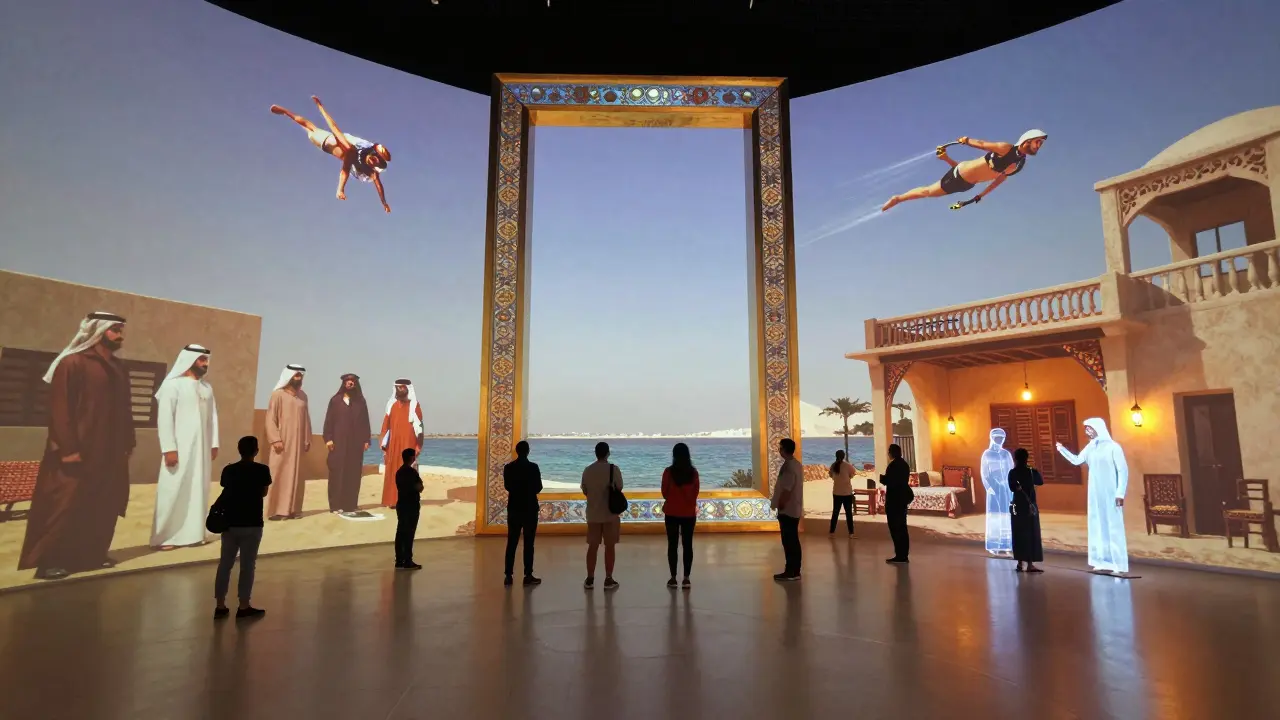
Step inside the base of the frame, and you enter a museum called Dubai: City of Stories. It’s not a dusty collection of artifacts. It’s an immersive, 360-degree digital experience that takes you through Dubai’s transformation-from a sleepy fishing village in the 1950s to the global hub it is today.
Using projection mapping, holograms, and interactive touchscreens, you’ll walk through scenes of pearl diving, Bedouin life, and the discovery of oil. There’s a replica of a 1960s Emirati home, complete with traditional furnishings. You’ll hear stories from locals who lived through the change. One man talks about riding a camel to work in the 1970s. Another remembers the first traffic light being installed. These aren’t tourist scripts. These are real voices.
The gallery doesn’t just show history. It shows how identity was shaped. Dubai didn’t just build towers-it built a new culture. And this place tells you how.
Why It’s Better Than Other Viewpoints
You could go to the Burj Khalifa, the Ain Dubai observation wheel, or even the top of a hotel. But none of them do what the Dubai Frame does.
- The Burj Khalifa shows height-but not connection.
- The Ain Dubai gives you a circular view-but no story.
- Hotels give you luxury-but no meaning.
The Dubai Frame forces you to ask: How did we get here? It doesn’t just show you the skyline. It shows you the journey.
And here’s the thing: most visitors don’t realize they’re missing this. They book a helicopter tour or a rooftop bar. But those experiences are about spectacle. The Dubai Frame is about understanding.
Practical Tips for Your Visit
If you’re planning to go, here’s what you need to know:
- Go early or late. The best light for photos is between 7-9 a.m. or 4-6 p.m. Midday sun makes the glass glare.
- Buy tickets online. Skip the line. Tickets cost around AED 50 for adults, and kids under 3 get in free.
- Wear comfortable shoes. You’ll walk 150 meters across the sky bridge, and there are 120 steps to the top if you skip the elevator.
- Bring a power bank. The gallery is full of interactive screens-and you’ll want to take screenshots.
- Stay for sunset. The frame lights up at dusk, and the views from the bridge are unforgettable.
The whole experience takes about 90 minutes. That’s less than half the time you’d spend waiting in line at the Burj Khalifa. And you’ll walk away with something more valuable than a selfie-you’ll walk away with a story.
Who Should Visit?
This isn’t just for first-time tourists. If you’ve been to Dubai before, this is the place you should revisit. It’s for families who want to teach kids about the city’s roots. It’s for photographers looking for clean, dramatic lines. It’s for history lovers who want to feel how a place changed.
And if you’re from Dubai? You’ll see your city in a new way. I’ve lived here for over a decade. I thought I knew it. Then I walked across the sky bridge and realized I’d never truly seen how far we’ve come.
The Bigger Picture
The Dubai Frame isn’t about bragging rights. It’s not here to say, Look how big we are. It’s here to say, Look how far we’ve come.
It’s one of the few landmarks in Dubai that doesn’t just celebrate wealth-it celebrates transformation. In a city known for speed, it slows you down. In a world obsessed with the next big thing, it reminds you to look back.
That’s why it’s a must-see. Not because it’s tall. Not because it’s shiny. But because it answers the question no other attraction does: What kind of city is this?