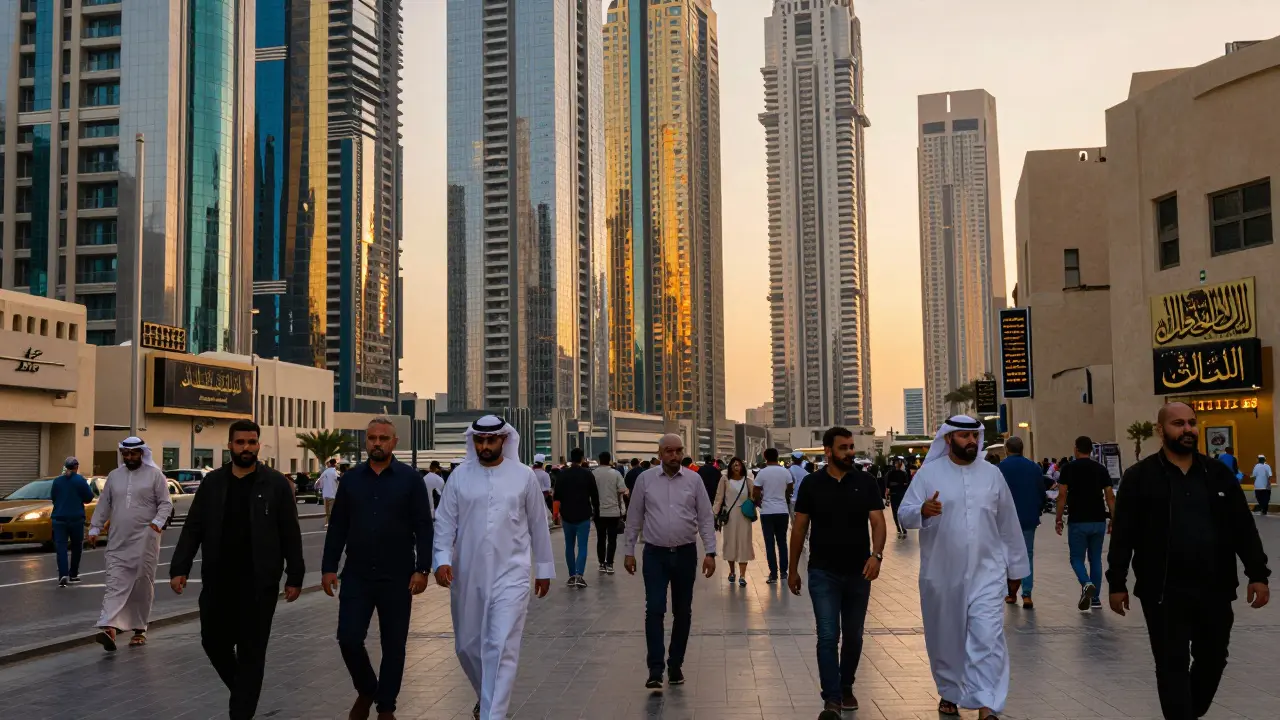
When you step into Dubai, the first thing you notice isn’t just the skyscrapers or the golden deserts-it’s the mix of voices around you. People speak in rapid Arabic, crisp English, loud Hindi, soft Urdu, and even Filipino. But if you’re wondering what language they officially speak in Dubai, the answer is simple: Arabic. It’s the national language, the one used in government, law, schools, and religious life. Yet, if you think you’ll need to learn Arabic to get around, you’re in for a surprise. Most people you interact with-shopkeepers, taxi drivers, hotel staff, even police officers-speak fluent English.
Arabic: The Heartbeat of Dubai
Modern Standard Arabic is the official language of the United Arab Emirates, and it’s taught in every public school. You’ll see it on road signs, official documents, TV news broadcasts, and religious sermons. But here’s the twist: most Emiratis don’t speak Modern Standard Arabic in daily life. Instead, they use Gulf Arabic, a regional dialect that’s faster, softer, and full of local expressions. If you hear someone say “shlonak?” instead of the formal “Kayfa haluk?”, you’re hearing Gulf Arabic. It’s the language of family dinners, market haggling, and weekend beach trips.
Even though Arabic is the official language, only about 11% of Dubai’s population are Emirati citizens. The rest come from over 200 countries. That means Arabic is spoken at home by a minority, not the majority. You’ll hear it most clearly in older neighborhoods like Al Fahidi or during Ramadan when the call to prayer echoes across the city.
English: The Real Working Language
If you’re visiting Dubai, English is your lifeline. It’s the language of business, tourism, banking, and daily life. Almost every sign-from the metro station to the grocery store-is in both Arabic and English. ATMs, hospital forms, and even restaurant menus are bilingual. You won’t find a single five-star hotel where staff don’t speak English fluently. Even taxi drivers, who might not speak Arabic at all, know enough English to get you to Burj Khalifa without a GPS.
Why? Because Dubai was built on global trade. Before oil, it was a port city. Today, it’s a hub for 3.5 million expats. Companies from the UK, India, the US, and Australia operate here. Schools teach in English. Universities like the American University of Dubai use English as the medium of instruction. If you’re working here, you’ll likely use English for emails, meetings, and contracts-even if your boss is from Saudi Arabia or Egypt.
The Other Languages You’ll Hear
Dubai doesn’t just speak Arabic and English-it speaks a dozen others. Hindi and Urdu are everywhere. Walk into a supermarket in Deira, and you’ll hear customers chatting in Hindi. Ask for directions near the Gold Souk, and you’ll likely get answers in Urdu. That’s because over 40% of Dubai’s population is from India and Pakistan. Filipino workers dominate the service industry-you’ll hear Tagalog in hotels, cleaning crews, and security booths. Bengali, Tamil, Tagalog, Persian, Russian, and Chinese are also common.
It’s not chaos-it’s a quiet, daily translation network. A Nepali construction worker might ask a Pakistani shopkeeper to translate a message to an Emirati manager. The shopkeeper speaks Urdu and Arabic. The manager speaks Arabic and English. The worker speaks Nepali and broken English. Somehow, it all works.
Do You Need to Learn Arabic to Visit Dubai?
No. Not even a little. If you speak English, you’ll get by perfectly. You can order food, book a hotel, ride the metro, and ask for help without knowing a single Arabic word. But if you want to connect deeper-maybe bond with a local shop owner or show respect during Ramadan-learning a few phrases goes a long way.
- As-salamu alaykum - Hello (response: Wa alaykum as-salam)
- Shukran - Thank you
- Min fadlak - Please (to a man)
- Min fadlik - Please (to a woman)
- Kayfa halak? - How are you? (formal)
Even saying “Shukran” when you pay for a coffee will make someone smile. You don’t need to be fluent. You just need to try.
Language in Daily Life: What You’ll Actually Experience
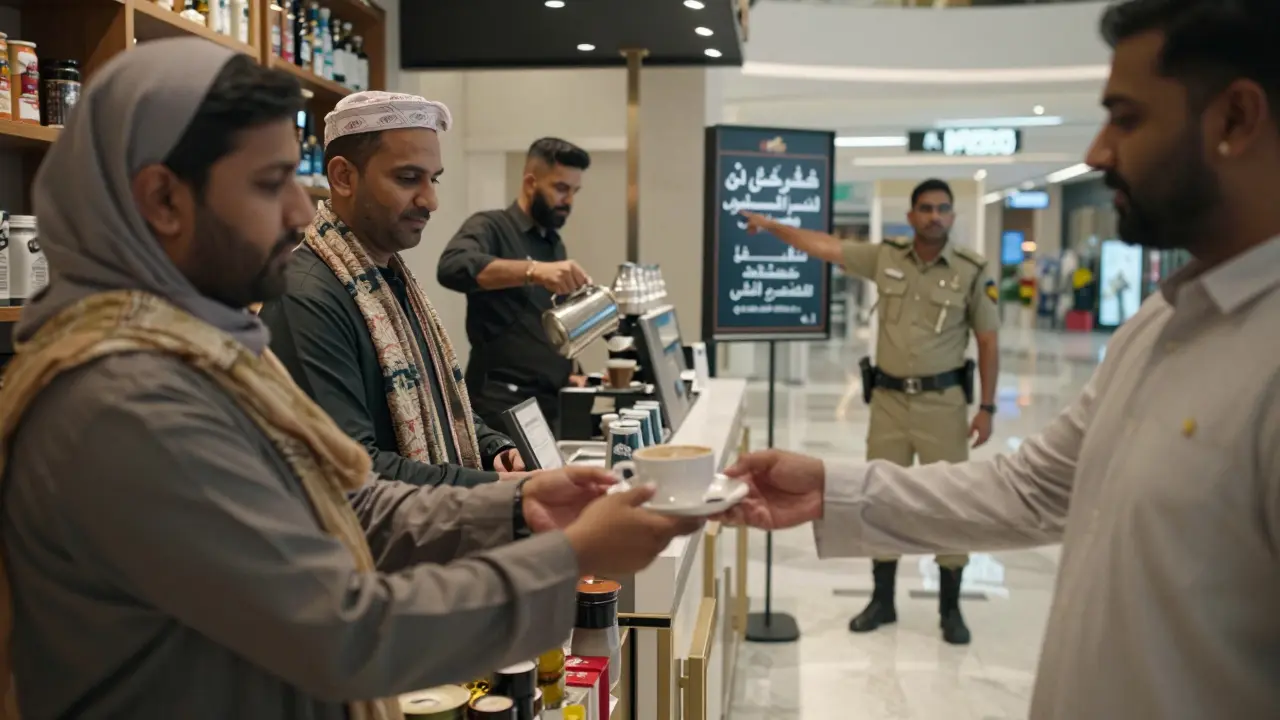
Think about this: You’re at Dubai Mall. You buy a scarf from a shop run by a woman from Bangladesh. She speaks Bengali and English. The security guard is from Nepal-he speaks Nepali and English. The man behind the coffee counter is from Egypt-he speaks Arabic and English. The woman helping you with your luggage speaks Russian and English. The sign above you? Arabic and English. The app you use to pay? English.
You never have to switch languages. Everyone adapts to you. That’s the magic of Dubai. It’s not about one language. It’s about communication without borders.
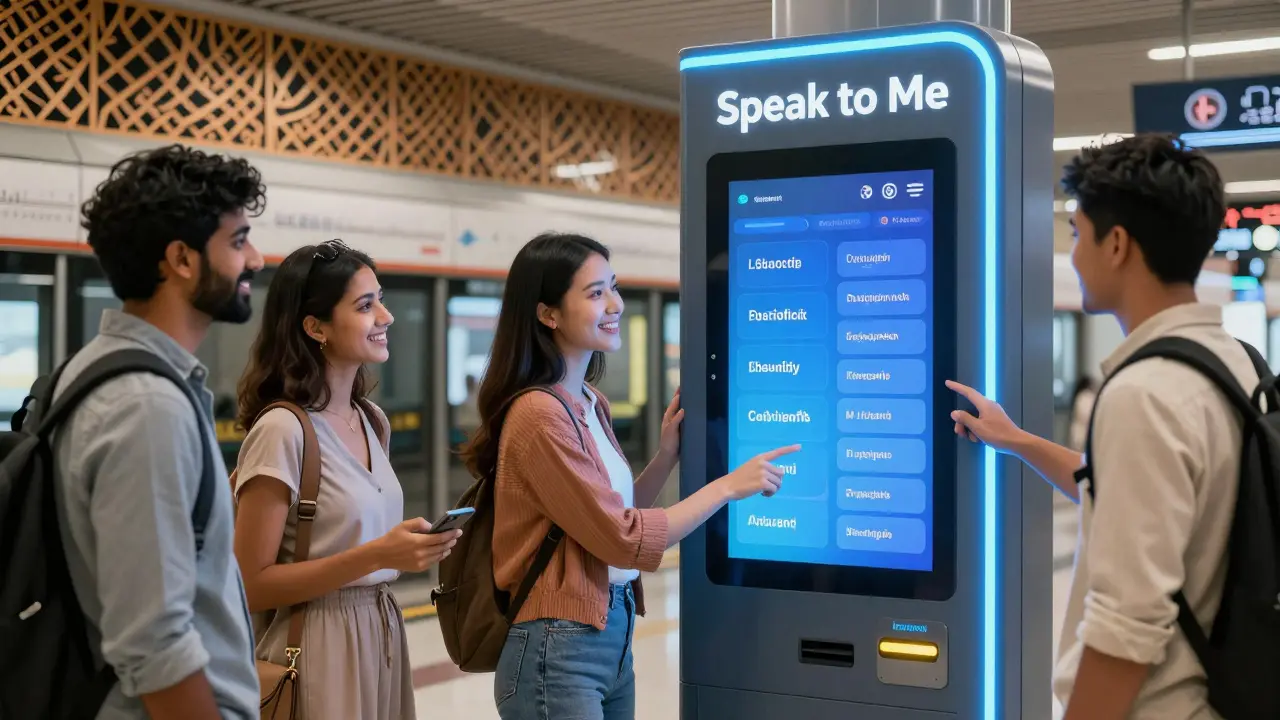
Even the government gets it. In 2024, Dubai launched a new public service initiative: “Speak to Me”. It’s an AI-powered kiosk in metro stations that lets you ask questions in 12 languages-including English, Hindi, Tagalog, and Mandarin-and gets an instant Arabic or English answer. No one expects you to learn Arabic. They expect you to be heard.
What About Children in School?
Emirati children go to public schools where Arabic is the main subject. They study Islamic studies, Arabic grammar, and Emirati history. But they also learn English from kindergarten. By grade 5, most subjects-math, science, social studies-are taught in English. Private schools? Almost all use English. International schools follow British, American, or Indian curriculums. So while Arabic is culturally essential, English is the practical tool for success.
Many Emirati families now speak English at home, especially in mixed households. A child might say “I want juice” in English to their mom, then answer her Arabic question about school with a shrug and a smile.
Will Arabic Disappear?
No. And that’s not the point. Arabic isn’t being replaced-it’s being shared. It’s still the language of identity, heritage, and faith. You’ll hear it in mosques, in poetry nights, in traditional dances, and in the way Emiratis greet each other with warmth and honor. But in the daily grind of work, shopping, commuting, and parenting? English-and dozens of other languages-carry the load.
Dubai doesn’t erase its roots. It layers them. Arabic is the foundation. English is the bridge. The rest? The voices of the world that built this city.
Is Arabic the only official language in Dubai?
Yes, Arabic is the only official language of the UAE, including Dubai. It’s used in government, courts, schools, and religious institutions. However, English is the dominant language for business, tourism, and daily communication due to the city’s large expat population.
Can I survive in Dubai without knowing Arabic?
Absolutely. English is spoken and understood by the vast majority of people working in tourism, retail, healthcare, and transportation. Signs, menus, ATMs, and public transport announcements are all in English. You won’t face any barriers if you only speak English.
Why is English so common in Dubai?
Dubai’s economy depends on global trade, tourism, and foreign investment. Over 85% of its population are expatriates from countries like India, the Philippines, Pakistan, Egypt, and the UK. English became the common language for work, education, and daily interaction. It’s practical, not political.
Do Emiratis speak English at home?
Many do, especially in younger, urban families. In mixed households or those with children in international schools, English is often used alongside Arabic. But in traditional homes, especially in older generations, Arabic remains the primary language for family communication and cultural connection.
Are there language barriers for tourists in Dubai?
Very few. Dubai is one of the most language-accessible cities in the world. Public services, signs, apps, and staff are designed to accommodate English speakers. Even if you don’t speak English, you’ll find someone who speaks your language-whether it’s Russian, Chinese, or Tagalog. The city is built for global visitors.