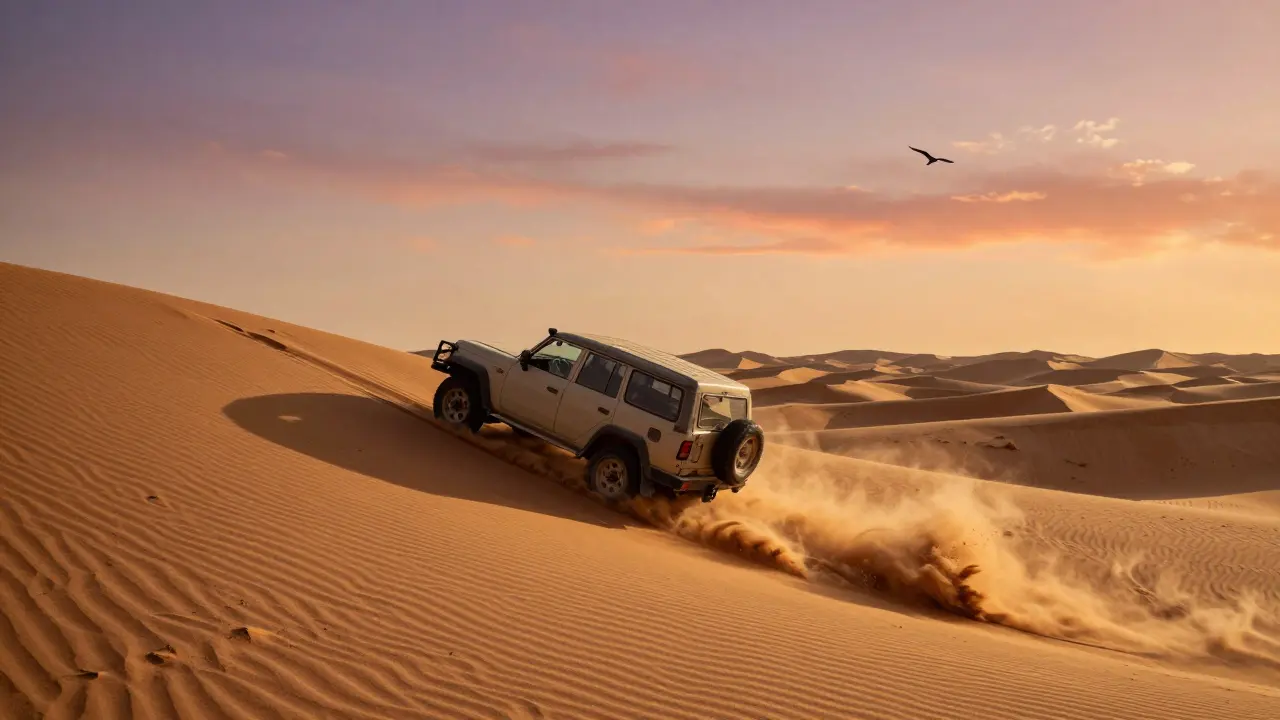
Picture this: the sun dips low, painting the desert in shades of gold and crimson. The sand stretches endlessly, silent except for the whisper of wind and the occasional call of a desert bird. Then, a roar breaks the quiet - a 4x4 kicks up a cloud of dust as it crests a dune, dropping sharply into the valley below. This isn’t a movie. This is a desert safari in Dubai, and it’s more real - and more magical - than you think.
What Makes a Desert Safari Different
A desert safari isn’t just a ride. It’s a full sensory experience that pulls you out of city life and drops you into a landscape that feels untouched by time. Unlike a drive through a national park, the Dubai desert is alive in its own way. The dunes shift with the wind. Sand gets into your shoes, your hair, your coffee. It’s raw, unpredictable, and strangely calming.
Most tours start in the late afternoon. You’re picked up from your hotel in a rugged 4x4, often with a group of strangers who become friends by sunset. The ride begins slow, then suddenly - the driver hits the gas. This is dune bashing, and it’s the heart of the safari. The vehicle climbs steep slopes at 45-degree angles, then plunges down the other side. Your stomach drops. You laugh. You scream. You forget you’re in one of the world’s most modern cities.
The Real Experience: Beyond the Thrills
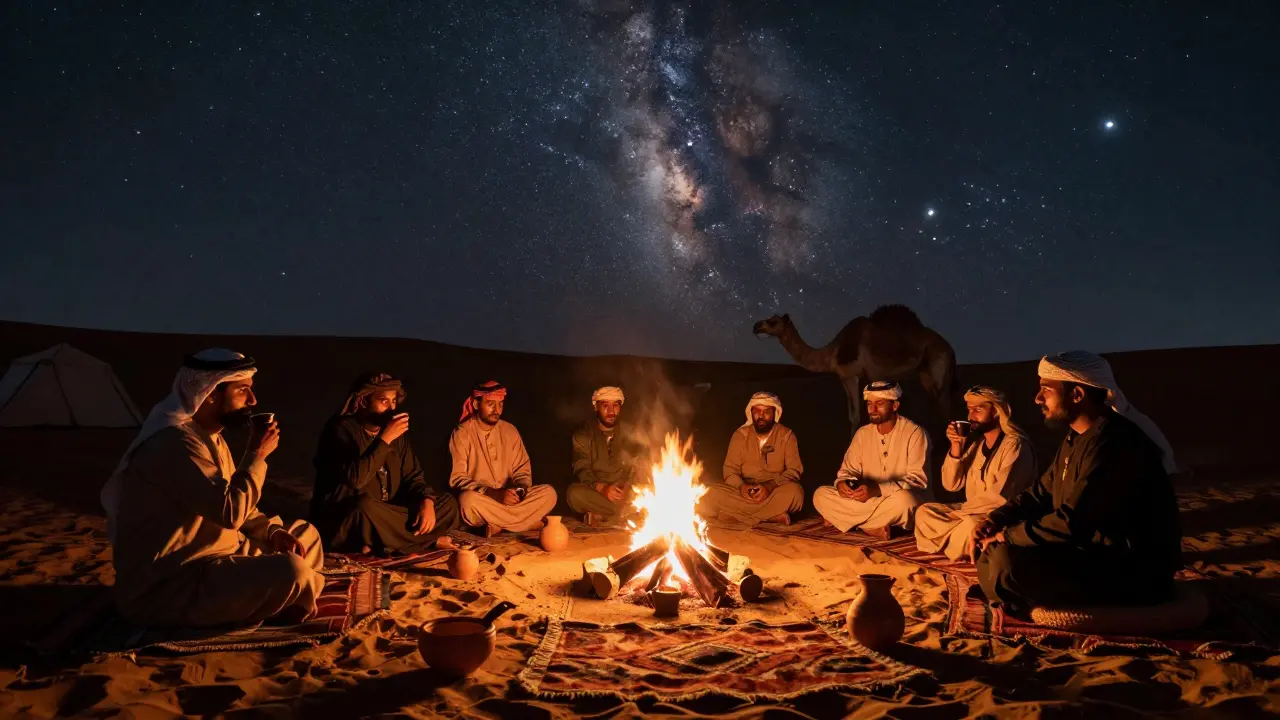
After the adrenaline, things slow down. You’re dropped off at a traditional Bedouin-style camp. The first thing you notice? The silence. No traffic, no sirens, no phone notifications. Just stars - thousands of them - brighter than you’ve ever seen. The air is cool, crisp, and smells faintly of wood smoke.
Here, you’ll ride a camel. Not the cartoon version you see in kids’ books. Real camels. Tall, slow, and surprisingly gentle. They move with a rocking gait that makes you sway like you’re on a boat. Kids laugh. Adults feel like kids again.
Then comes the food. A buffet of grilled meats, hummus, flatbread, and rice, cooked over an open flame. No fancy plating. No menus in three languages. Just honest, hearty food that tastes better because you’re hungry and the sun just set. Some camps serve Arabic coffee with cardamom - bitter, sweet, and strong. You sip it slowly, watching the firelight dance on the sand.
And then, the entertainment. Belly dancers move to live drumming. Henna artists paint intricate patterns on your hands. You might try on a keffiyeh, the traditional headscarf, and take a photo with your group. No one rushes you. No one pushes a sale. It’s just... presence.
When to Go and What to Wear
Desert safaris run year-round, but timing matters. Summer (June to August) can hit 45°C. Evenings are still hot, and the sand burns your feet. Winter (November to March) is ideal. Days are warm, around 25°C, and nights drop to a crisp 15°C - perfect for sitting by the fire.
What to wear? Comfort first. Loose cotton pants and a light top. No flip-flops. Closed shoes are a must - sand gets everywhere. Bring a light jacket or shawl for the evening. Sunscreen is non-negotiable. Even if it’s late afternoon, the sun still hits hard. Sunglasses? Yes. A hat? Even better.
And leave the perfume at home. The desert doesn’t need it. And neither do the camels.
Choosing the Right Tour
Not all desert safaris are the same. There are three main types:
- Standard Group Tours - Most common. $25-$40 per person. Includes pickup, dune bashing, camp visit, food, and entertainment. Good for solo travelers or small groups.
- Private Tours - $120-$200 for up to 6 people. You get your own vehicle, flexible timing, and a guide who tailors the experience. Ideal for families or couples wanting privacy.
- Overnight Camping - $80-$150. You stay in a tent under the stars, wake up to sunrise over the dunes, and get a full breakfast. No rush. No schedule. Just peace.
Check reviews for specific operators. Look for mentions of vehicle safety, driver skill, and food quality. Avoid tours that promise "exclusive" access to hidden spots - most of those are just marketing. The real magic is in the standard routes, done well.
What Most Tourists Miss
People come for the dune bashing. They leave with photos of camel rides. But the quiet moments? Those are the ones that stick.
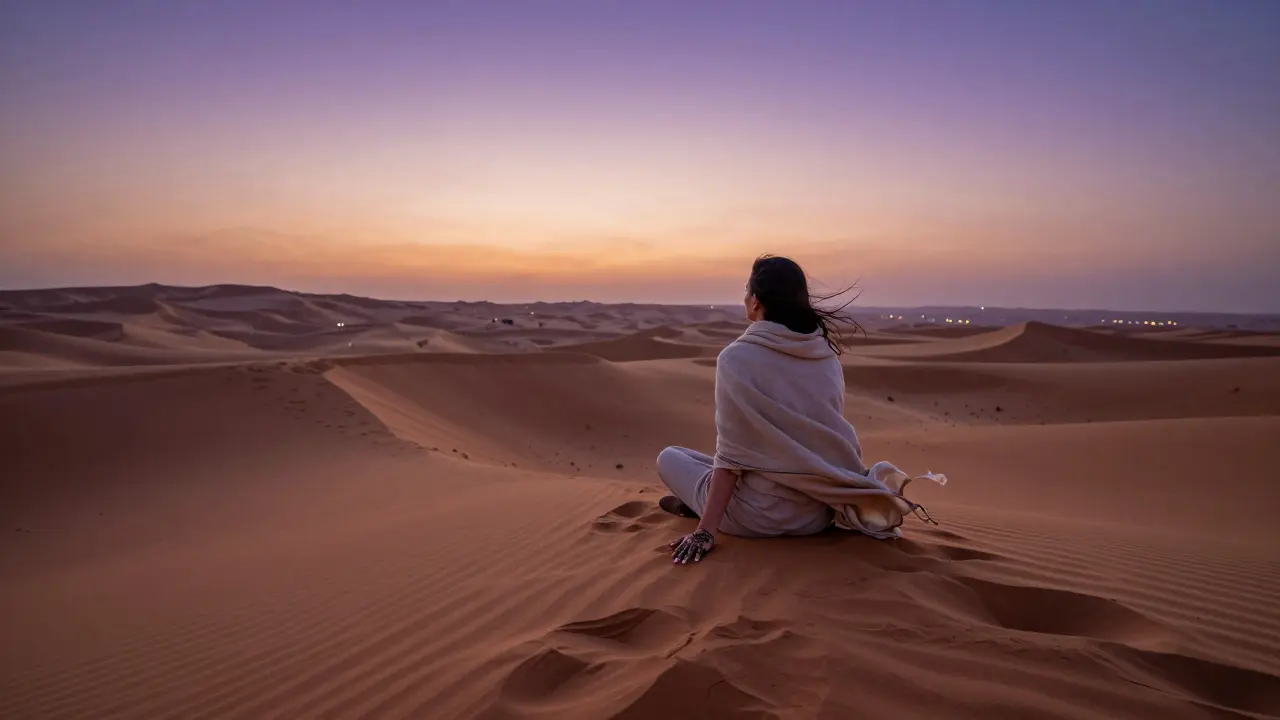
Watch the sunset from the top of a dune. Sit alone for five minutes. Listen. You’ll hear the wind change direction. You’ll see a falcon glide on a thermal. You’ll notice how the sand changes color with the light - from copper to rose to deep violet.
Ask your guide about the desert’s ecology. Yes, it’s harsh. But it’s full of life. The desert fox, the oryx, the Arabian sand gazelle. Even the beetles have adapted to survive. The Bedouin people lived here for centuries. They knew where to find water. They read the stars for navigation. That knowledge? It’s still alive.
Most tourists don’t ask. They just take pictures. But if you listen, you’ll leave with more than memories. You’ll leave with respect.
Why It Feels Like Magic
It’s not the camels. Not the dune bashing. Not even the food.
It’s the contrast. One moment, you’re stuck in traffic on Sheikh Zayed Road. The next, you’re alone on a dune with nothing but sky and sand. Time slows. Your phone signal disappears. Your mind quiets. You realize you haven’t thought about work, bills, or deadlines in hours.
That’s the magic. It’s not about spectacle. It’s about stillness. In a city that never sleeps, the desert teaches you how to be still.
And when you return to your hotel, the lights of Dubai glitter in the distance. You feel different. Lighter. Clearer. Like you’ve been reset.
Final Tip: Don’t Rush It
Book a safari. Go. But don’t treat it like a checklist item. Don’t just ride the dunes and snap a selfie. Sit. Watch. Breathe. Let the desert sink in.
The sand doesn’t care how fast you go. It’s been here for thousands of years. It’ll be here long after you’re gone. But for one evening, it lets you walk on it. That’s not just a tour. That’s a gift.
Are desert safaris safe for kids?
Yes, but choose the right tour. Standard group safaris with moderate dune bashing are fine for children over 5. Avoid extreme rides if they’re under 8. Most camps offer kid-friendly activities like henna, falcon shows, and storytelling. Always check the tour operator’s age policy - some require children to be at least 4 years old for dune bashing.
Can I do a desert safari without a guide?
No, and you shouldn’t try. The desert is vast, and dunes look identical from every angle. Even GPS can fail. Local guides know the safe routes, weather patterns, and emergency spots. Plus, they handle the vehicle. Dune bashing requires skill - and a license most tourists don’t have. Stick with licensed operators. It’s not just smart. It’s necessary.
What’s the best time of day for photos?
Golden hour - the hour after sunrise or before sunset. The light is soft, long, and warm. The shadows stretch across the dunes, creating texture and depth. Avoid midday. The sun is too harsh, and the sand reflects too much light, washing out your photos. Bring a lens hood and extra batteries - the cold night air drains them faster than you think.
Is alcohol served on desert safaris?
No. Alcohol is not served on standard desert safari tours in Dubai. This follows local laws and cultural norms. Some private tours may offer non-alcoholic mocktails or sparkling water, but any mention of alcohol service is misleading. Stick to traditional Arabic coffee, tea, or fresh juices - they taste better anyway.
How long does a desert safari last?
Most tours last 6 to 8 hours. Pickup is usually around 3:30 PM. You return to your hotel by 11 PM. Overnight safaris last 12-14 hours, starting in the afternoon and ending the next morning. If you’re short on time, look for "express" tours - they run 4 hours but skip the camp and food. You still get dune bashing, but miss the full experience.