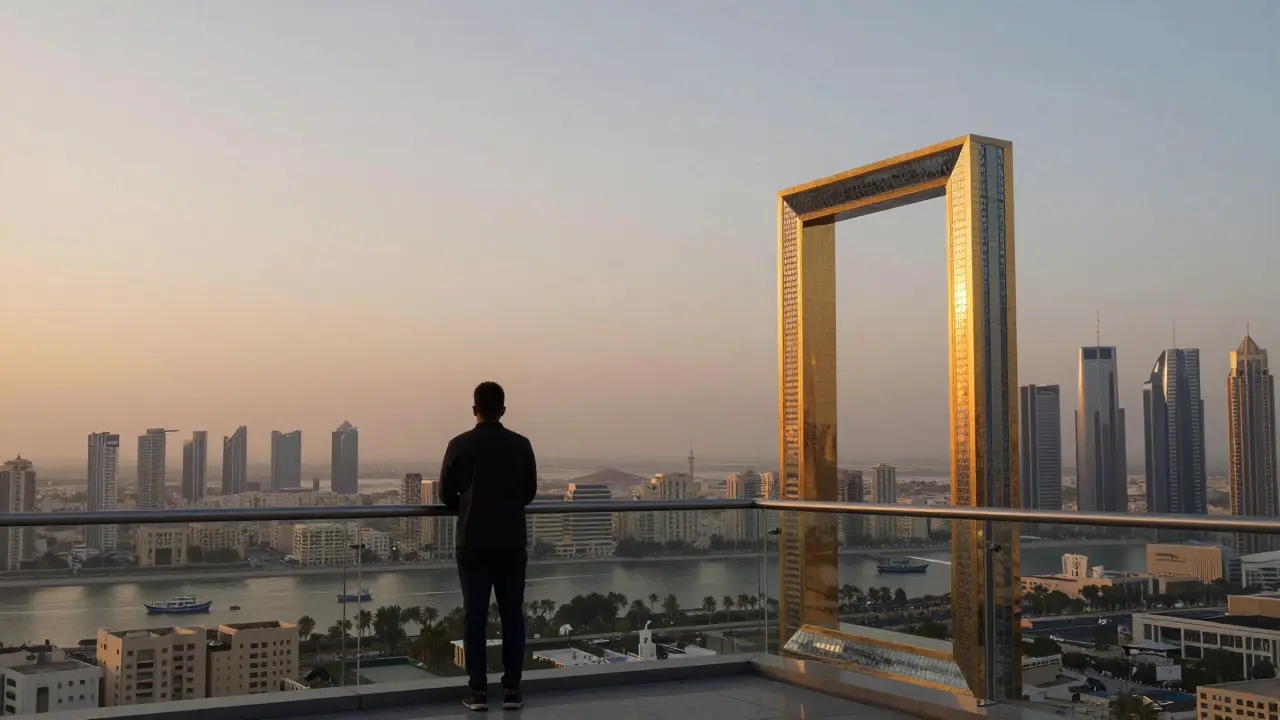
When you stand inside the Dubai Frame, you’re not just looking at a building-you’re standing on a bridge between two worlds. One side shows the dusty, low-rise neighborhoods of old Dubai, where fishing boats still dock at Deira Creek and spice markets hum with life. The other side stretches out to the glittering towers of modern Dubai-Burj Khalifa, Palm Jumeirah, and the endless glass skyline that defines the city today. This isn’t just a photo op. It’s a physical metaphor for how Dubai became what it is.
What the Dubai Frame Actually Is
The Dubai Frame isn’t a tower, a bridge, or a museum. It’s a 150-meter-tall golden frame, shaped like a giant picture frame standing upright on the ground. It was opened in January 2018 after five years of construction, costing around $22 million. Its design, by Fernando Donis, won an international competition for its bold simplicity. The frame measures 93 meters wide and 30 meters deep, making it the largest picture frame in the world-officially recognized by Guinness World Records.
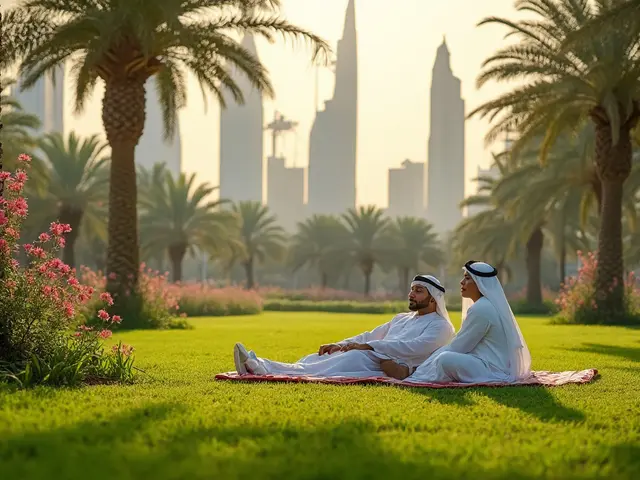
What makes it unique isn’t just its size. It’s built to frame two distinct versions of Dubai. The structure sits between Zabeel Park and the older neighborhoods of Garhoud and Al Karama. Walk through the lower level, and you’re in a quiet, shaded plaza with fountains and palm trees. Look up, and you see the frame towering above you. Walk up the stairs or take the glass elevator to the top, and you step into a sky bridge that connects both sides of the frame. From there, you see the past and the future side by side-no filters, no edits, just real views.
Why It Was Built
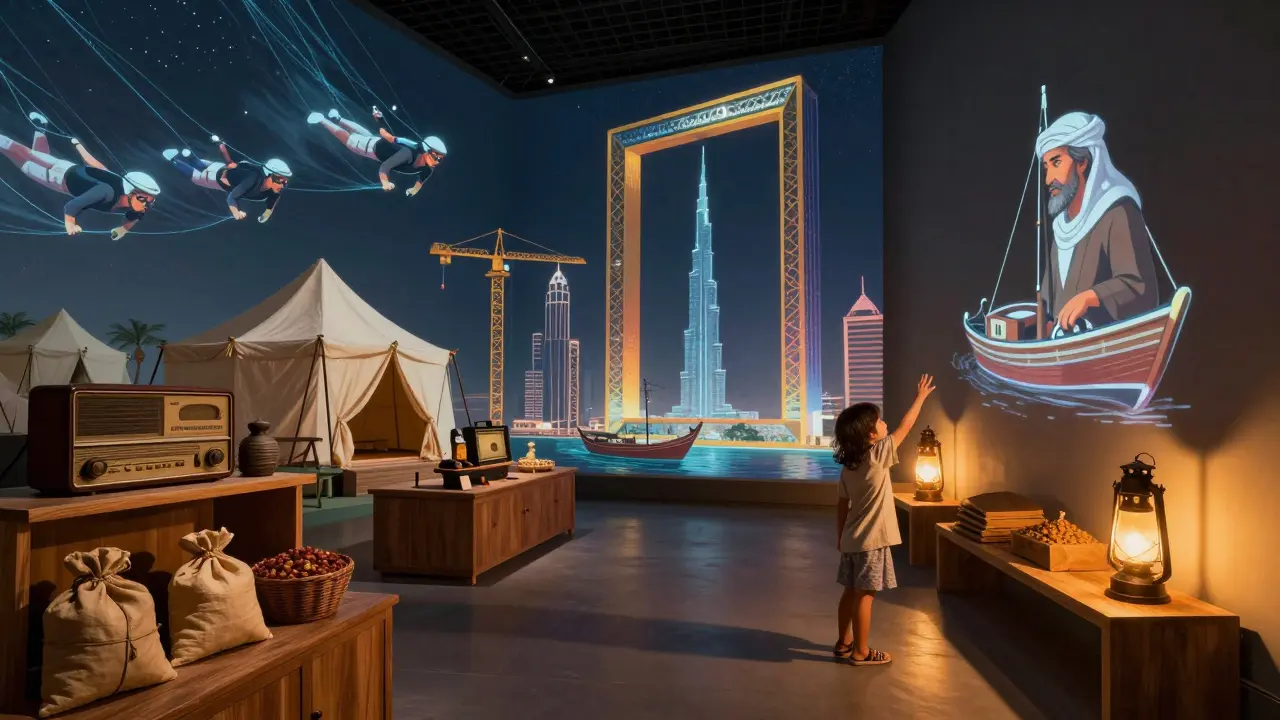
Dubai didn’t build this just to impress tourists. The city wanted to tell its own story. In the 1970s, Dubai was a small trading port with a population under 200,000. Today, it’s home to over 3 million people from nearly 200 countries. The Dubai Frame was meant to capture that transformation. Inside, the ground floor has a museum called Dubai: A Journey Through Time. It uses holograms, soundscapes, and real artifacts to show life in Dubai before oil. You’ll see photos of pearl divers, Bedouin tents, and old souks. There’s even a recreated 1950s shop with a radio playing Arabic music and shelves stocked with traditional goods.
The upper level is all about the present. The Sky Deck offers 360-degree views through floor-to-ceiling glass. On clear days, you can see the Burj Khalifa, the Dubai Mall, and even the desert beyond. The glass floor section lets you look straight down 150 meters-some people freeze. Others take selfies with the city beneath them. It’s not just a view. It’s a feeling: the weight of how far the city has come.
How It Changes the Way You See Dubai
Most tourists visit Dubai’s landmarks in isolation. They see the Burj Khalifa, then the Palm, then the Dubai Mall. But the Dubai Frame forces you to connect the dots. You realize the Burj Khalifa didn’t appear out of nowhere. It grew from the same ambition that built the souks, the dhow boats, and the first oil wells. The frame makes you see the city as a single, continuous story-not a collection of flashy stops.
Locals feel this differently. Many Emiratis who grew up in Al Karama or Al Ras say they never realized how close they were to the old city until they visited. One man, Ahmed Al Maktoum, told me he brought his 12-year-old daughter here. She had never seen a photo of her grandfather fishing in Dubai Creek. When they stood on the Sky Deck and he pointed to the old port, she said, ‘So that’s where he worked?’ That moment, he said, was worth more than any souvenir.
What You’ll Experience Inside
Visiting the Dubai Frame isn’t just about the views. It’s a multi-sensory journey.
- The audio-visual tunnel on the ground floor plays a 10-minute loop of Dubai’s evolution-dhow sails turning into cranes, sand dunes becoming skyscrapers.
- The glass sky bridge is climate-controlled and open 24/7. Sunset here is one of the most photographed moments in Dubai.
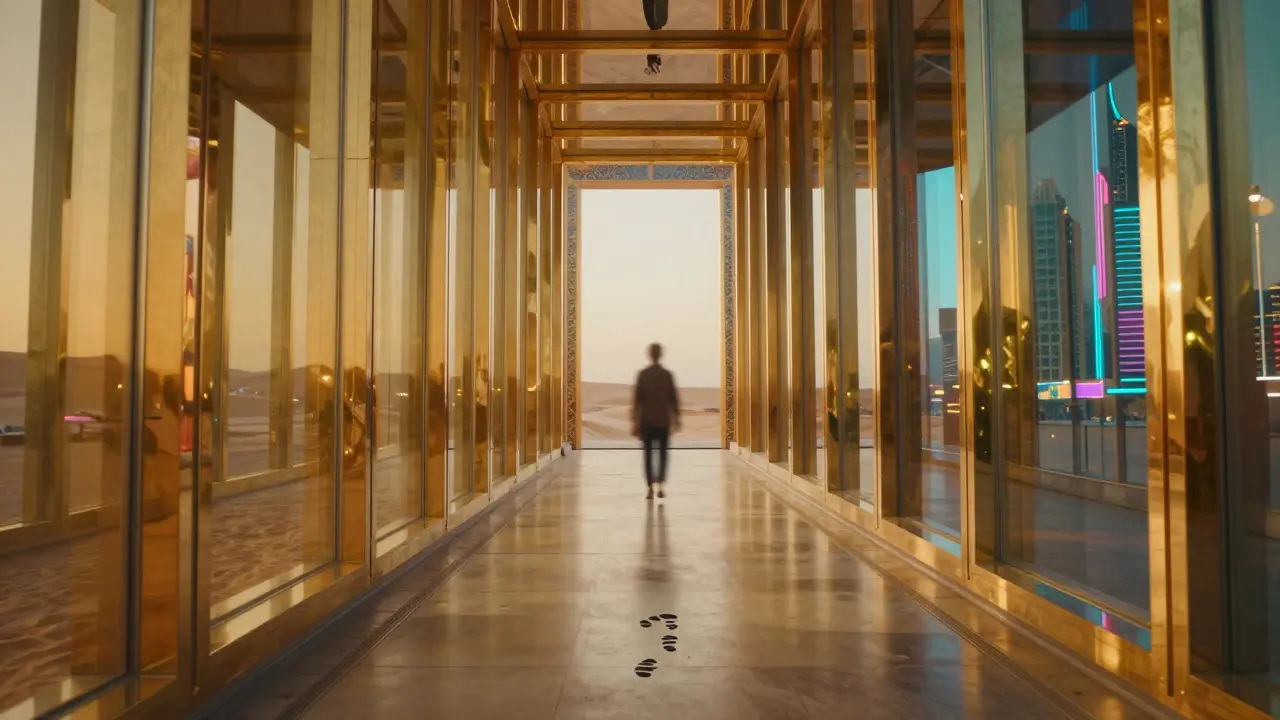
- The mirror-lined corridors inside the frame create endless reflections, making you feel like you’re floating between eras.
- The interactive exhibits let you touch screens to see how neighborhoods changed decade by decade. You can zoom into your own street if you know the name.
There’s also a small café on the top level with Arabic coffee and dates. It’s not fancy, but it’s the only place in Dubai where you can sip coffee while looking at both the old city and the new one at the same time.
How It Compares to Other Landmarks
Dubai has many iconic structures, but none of them do what the Dubai Frame does.
| Landmark | Height | Primary Purpose | Historical Connection |
|---|---|---|---|
| Dubai Frame | 150 meters | Connects past and present | Explicitly designed to frame both eras |
| Burj Khalifa | 828 meters | Symbol of ambition | No direct historical link |
| Palm Jumeirah | Land reclamation project | Architectural spectacle | None |
| Dubai Mall | Commercial complex | Shopping and entertainment | None |
| Al Fahidi Historical District | Low-rise buildings | Preservation of heritage | Only shows the past |
None of these places show you how Dubai changed. The Burj Khalifa is tall, but it doesn’t explain why it was built. The Palm is beautiful, but it’s just a man-made island. The Dubai Frame is the only structure that answers the question: How did we get here?
When to Visit and How to Get There
The best time to go is late afternoon. Arrive by 4 PM to catch the sunset. The light hits the golden frame just right, making it glow like a statue of molten metal. The views from the Sky Deck are even better after dark, when the city lights come on and the contrast between old and new becomes even sharper.
Getting there is easy. It’s right next to Zabeel Park, which is served by the Dubai Metro’s Green Line. The nearest station is Al Jafiliya, a 5-minute walk. If you’re driving, there’s free parking nearby. Entry tickets cost 50 AED for adults and 20 AED for children under 12. Seniors and people with disabilities get in free. No reservations are needed-you just show up.
What People Get Wrong About It
Many think it’s just a giant photo backdrop. It’s not. Others say it’s overpriced. But for 50 AED, you get a full experience: the museum, the sky bridge, the views, and the story. It’s not a theme park ride. It’s a quiet, thoughtful piece of urban storytelling.
Some locals used to call it ‘the golden doorframe’ and joked it was useless. But now, it’s common to see Emirati families visiting on weekends. School groups come for history lessons. Tourists come with cameras. And every day, someone stands in the middle of the frame, looks left and right, and just… stops. They don’t say anything. They just understand.
Why It Matters Beyond Tourism
The Dubai Frame isn’t just for visitors. It’s a national symbol. It reminds Emiratis that their identity isn’t just in the skyscrapers-it’s in the resilience, the trade routes, the desert wisdom, and the quiet courage of those who built the city before the cranes arrived. It’s a monument to change, not just to wealth.
When you leave, you don’t just remember the view. You remember the feeling-that the past isn’t gone. It’s still here, standing beside the future, waiting to be seen.
Is the Dubai Frame worth visiting?
Yes-if you want to understand Dubai beyond the glitz. It’s not a thrill ride, but it’s the only place where you can literally stand between old and new Dubai. The views, the museum, and the emotional impact make it one of the most meaningful stops in the city.
How long should I spend at the Dubai Frame?
Plan for 1.5 to 2 hours. Spend 30 minutes in the museum, 45 minutes on the Sky Deck, and another 15-20 minutes walking around the lower plaza. If you’re taking photos or just soaking in the views, you could stay longer.
Can I visit the Dubai Frame at night?
Yes. The Sky Deck is open until 11 PM daily. The frame is beautifully lit at night, and the city lights below make for stunning photos. It’s less crowded after 8 PM, which makes it a peaceful time to visit.
Is the Dubai Frame accessible for wheelchair users?
Yes. The entire site is wheelchair accessible, including elevators to the Sky Deck, ramps, and accessible restrooms. There are tactile maps and audio guides available for visually impaired visitors.
Are there any free attractions near the Dubai Frame?
Yes. Zabeel Park, which surrounds the frame, is free to enter and has walking trails, gardens, and picnic areas. You can also walk to Al Karama and Al Ras neighborhoods for authentic Emirati food at local cafés without spending a dirham on entry.